
What’s The Deal With The Costumes In “Wuthering Heights”?
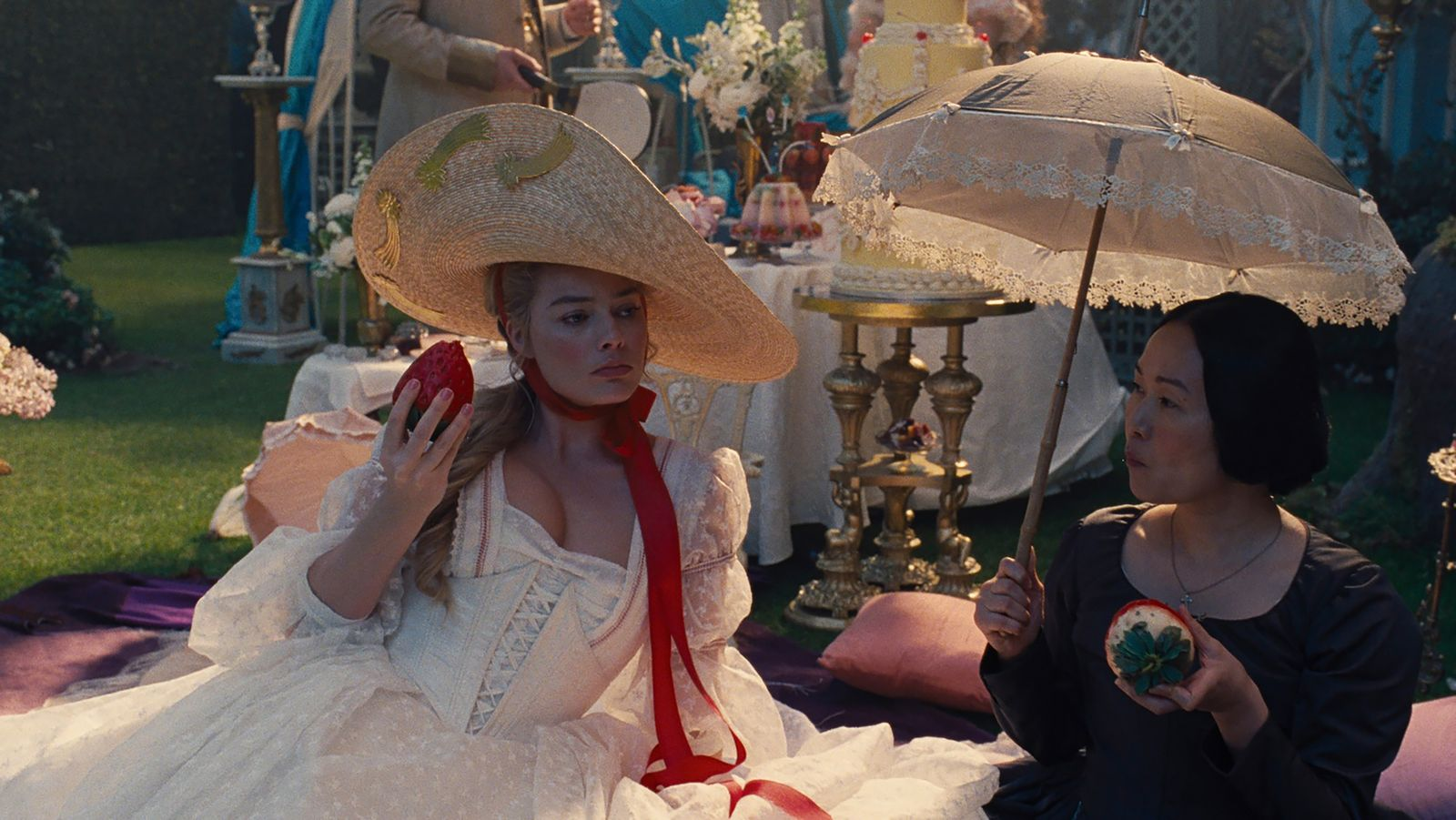
Corsets, red, and jumbo strawberries in Emerald Fennell’s Wuthering Heights adaptation
It should be noted off the bat that this is not a comprehensive review of Wuthering Heights (2026), as to be honest, I am still processing my full thoughts on the matter. I never read the Emily Brontë novel, so I hold no strong feelings towards the faithfulness, or lack thereof, of Emerald Fennell’s film, but even then, I could feel that the film had very little to do with its source material. That being said, I’m still trying to sort through what exactly Fennell was trying to communicate, and why she needed the Wuthering Heights framing to do so.
BUT…I am ready to talk about the costume and production design of this film, because wow, that is rich with story and character. The stylistic elements—costumes, production, music, lighting—were by far the strongest parts of the film, and through that lens I could feel so much of what Fennell was trying to convey. She’s a master of capturing sensory details to evoke powerful feelings and emotions. It’s the story and character building that I struggled with…but again, that is not what we are here to talk about!
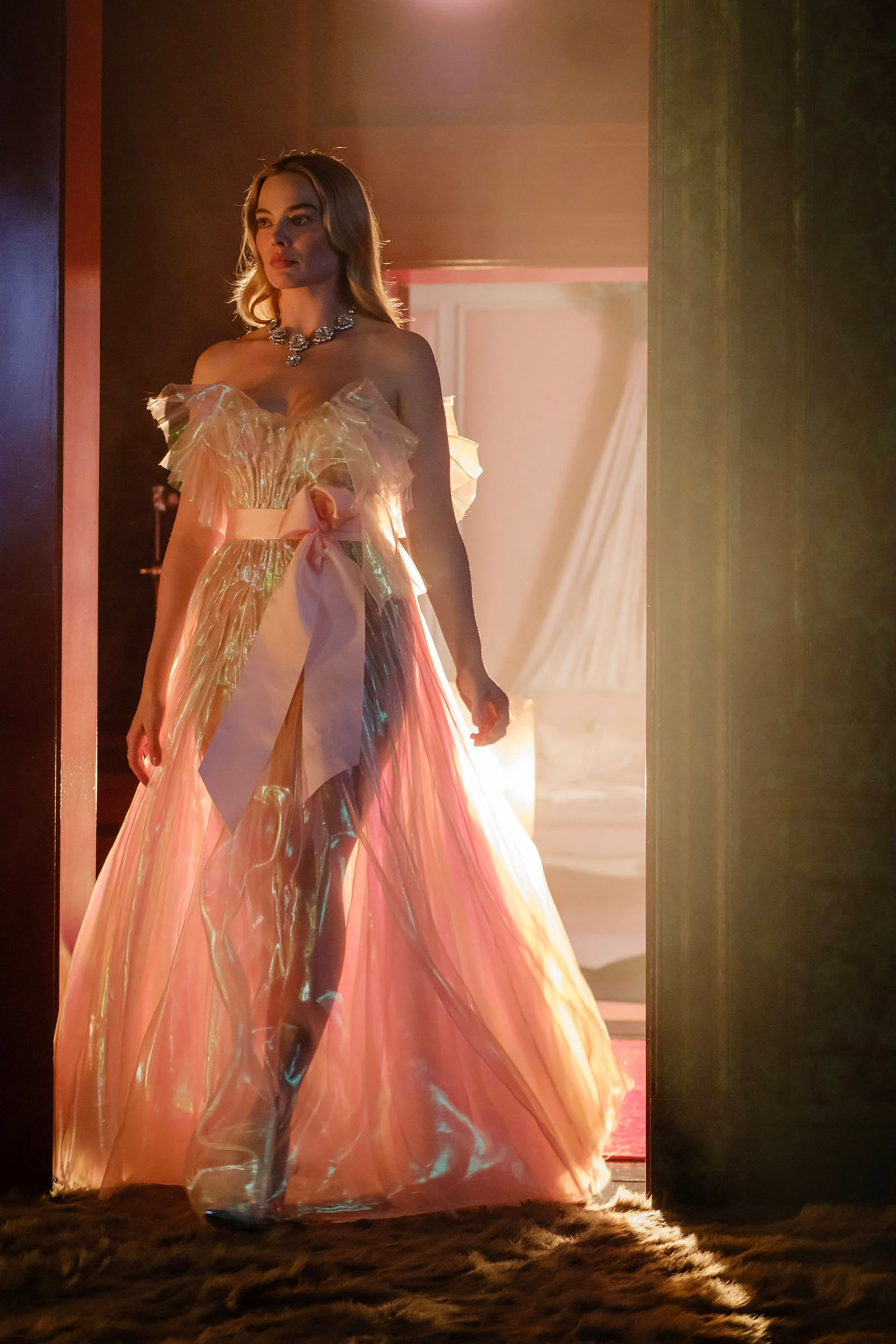
Cellophane nightgowns aren’t a staple of 1770s England, but they evoke Cathy’s state of mind
When set images and production stills were made public, there was much hullabaloo about the anachronistic costumes. In Brontë’s epic novel, the story takes place from the 1770s to the early 1800s, so the book’s admirers were aghast when they saw Margot Robbie sporting cellophane nightgowns and liquid-like fabrics that felt more akin to 1950s costume dramas than Georgian England. Between that and the raunchy marketing that played up the sexual tension and eroticism of the Cathy-Heathcliff entanglement, it was clear that Fennell’s Heights was going to be a very loose adaptation indeed.
In fact, costume designer Jacqueline Duran (the legend behind some of my favorite film costumes, including Atonement, Anna Karenina, Spencer, and yes, Barbie) cited such classic Hollywood inspirations as Gone With The Wind’s Scarlett O’Hara and the 1955 film Sissi in an interview with Vogue. Margot Robbie’s Cathy is introduced as a spunky and defiant heroine, spoiled and entitled despite her decrepit surroundings that have long since fallen into ruin. She’s fashioned as such, wearing laced-up corsets over billowing blouses and gathered skirts that soak in the mud and dirt of her home on the moors. She’s beautiful, but she’s free, and she’s brash, too.
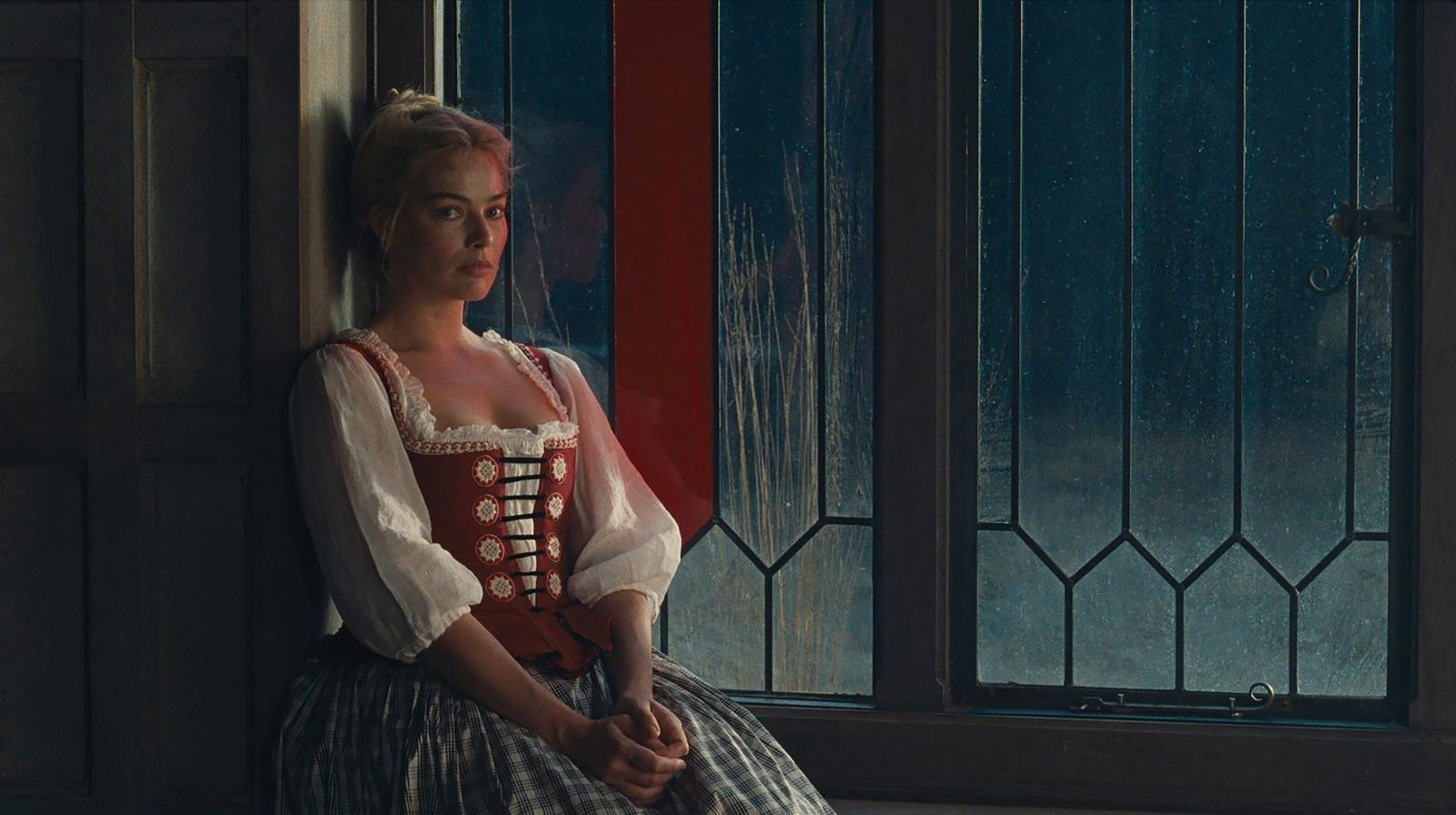
Cathy’s typical ensembles on the moors of Wuthering Heights
Once she encounters the new neighbors, the Lintons, and their picturesque dollhouse of a home (Mr. Linton is an incredibly wealthy textiles merchant), she becomes driven by curiosity to make their acquaintance. As all good heroines do, she breaks her ankle so that she can be tended to by the Lintons and naturally charms Mr. Linton (Shazad Latif). Her return home to Wuthering Heights is the equivalent of the secretly pretty girl taking off her glasses in a 1990s teen flick; she arrives in a stunning rosette-printed chemise and vibrant red skirt that she now worries about getting muddied. Nelly rightfully notes aloud, “You have been transformed.”
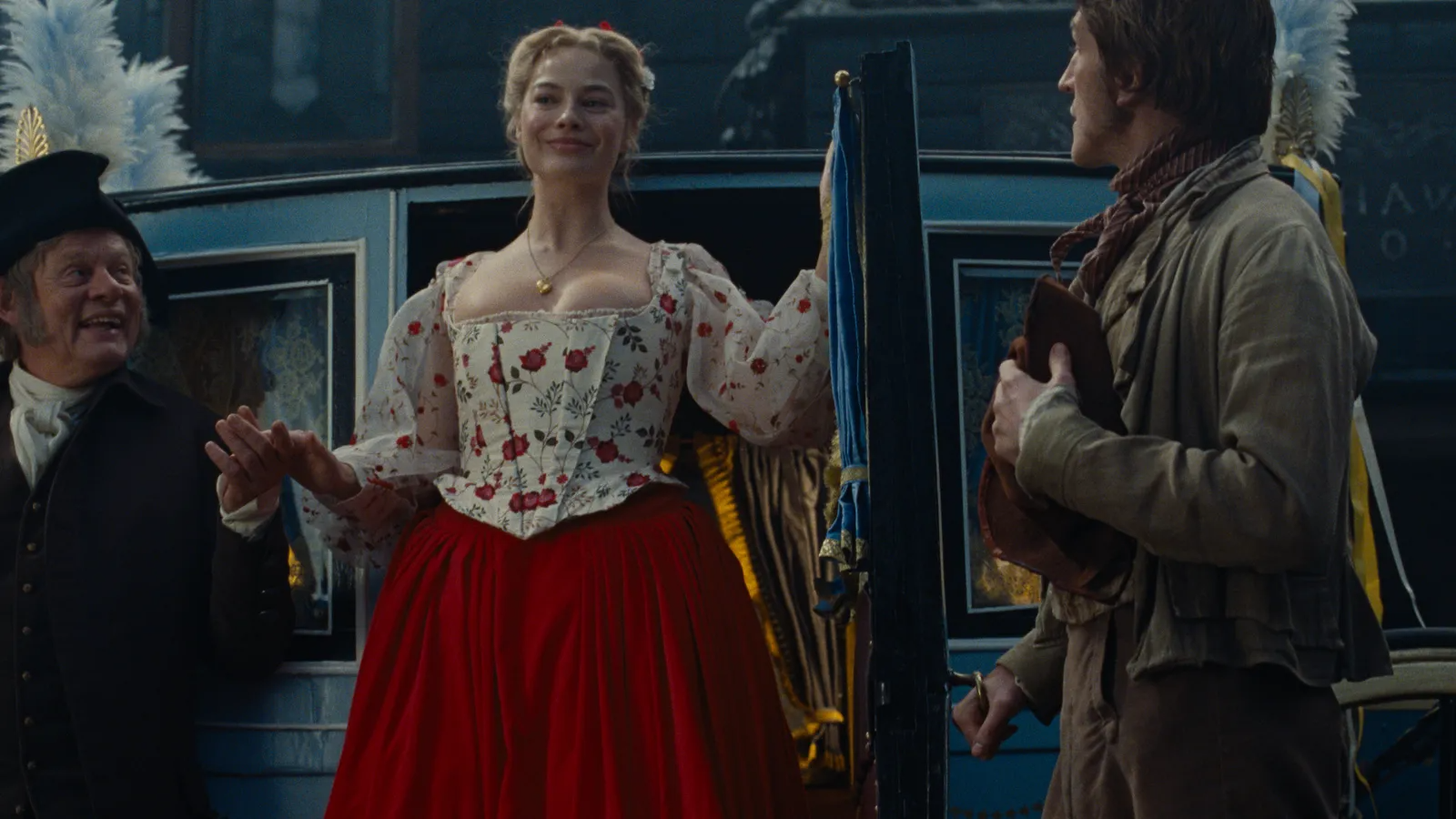
Cathy’s transformation, highlighted through her clothing
It couldn’t be a truer statement. Red remains Cathy’s signature color throughout the film, but the warm, naturalistic maroons and softened, worn-in fabrics give way to highly saturated reds, stark whites, and stiff textiles as Cathy shapes further into her transformed self. She replaces her untamed tresses with elaborate updos, often braided with ribbons resembling corsets. And speaking of corsets, those get more intricate too, switching from front-lacing bodices to back-lacing styles that require assistance to wear. Her fashion, while not often historically accurate, does echo her character arc and her move into a higher place in society.
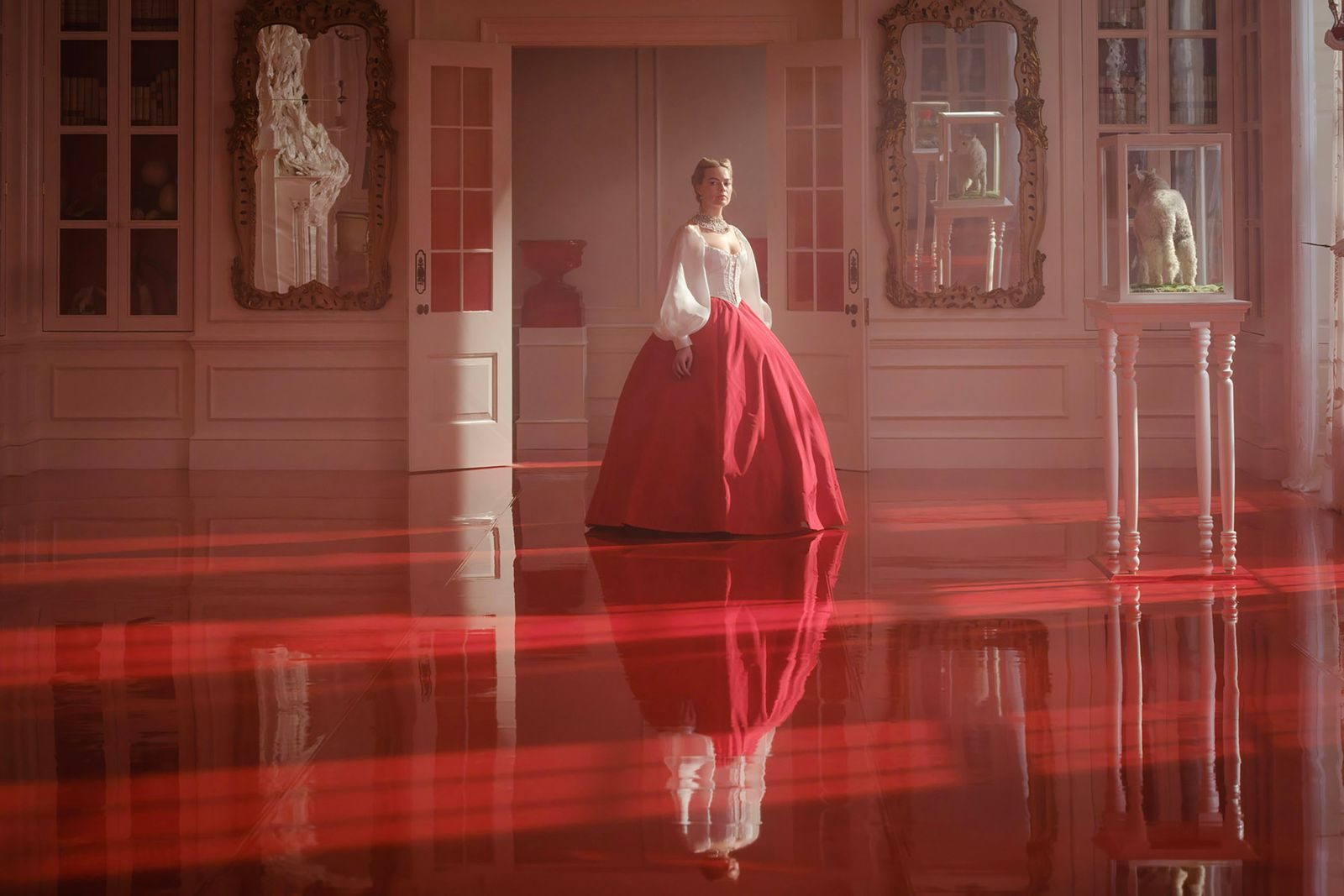
Reds get more vibrant, silhouettes more structured, as Cathy adapts to her new life
The new styles, along with the dollhouse of a home she now resides in with the Lintons, reflect her conflict between the security of a life with the Lintons and her unending yearning for Heathcliff (Jacob Elordi). Edgar Linton is depicted as a mostly well-meaning, if not boring and slightly cold, husband in Fennell’s interpretation. He provides for Cathy as best he can and isn’t immediately wary of Heathcliff’s reemergence in their lives, although even he eventually has his limits. Regardless, it’s not the passionate love affair Cathy is dreaming of, and her clothes—restrictive and severe—echo her emotions toward her new life. Her life has become a gilded cage, lovely in all the ways that one would expect, and empty in all the ways that matter.
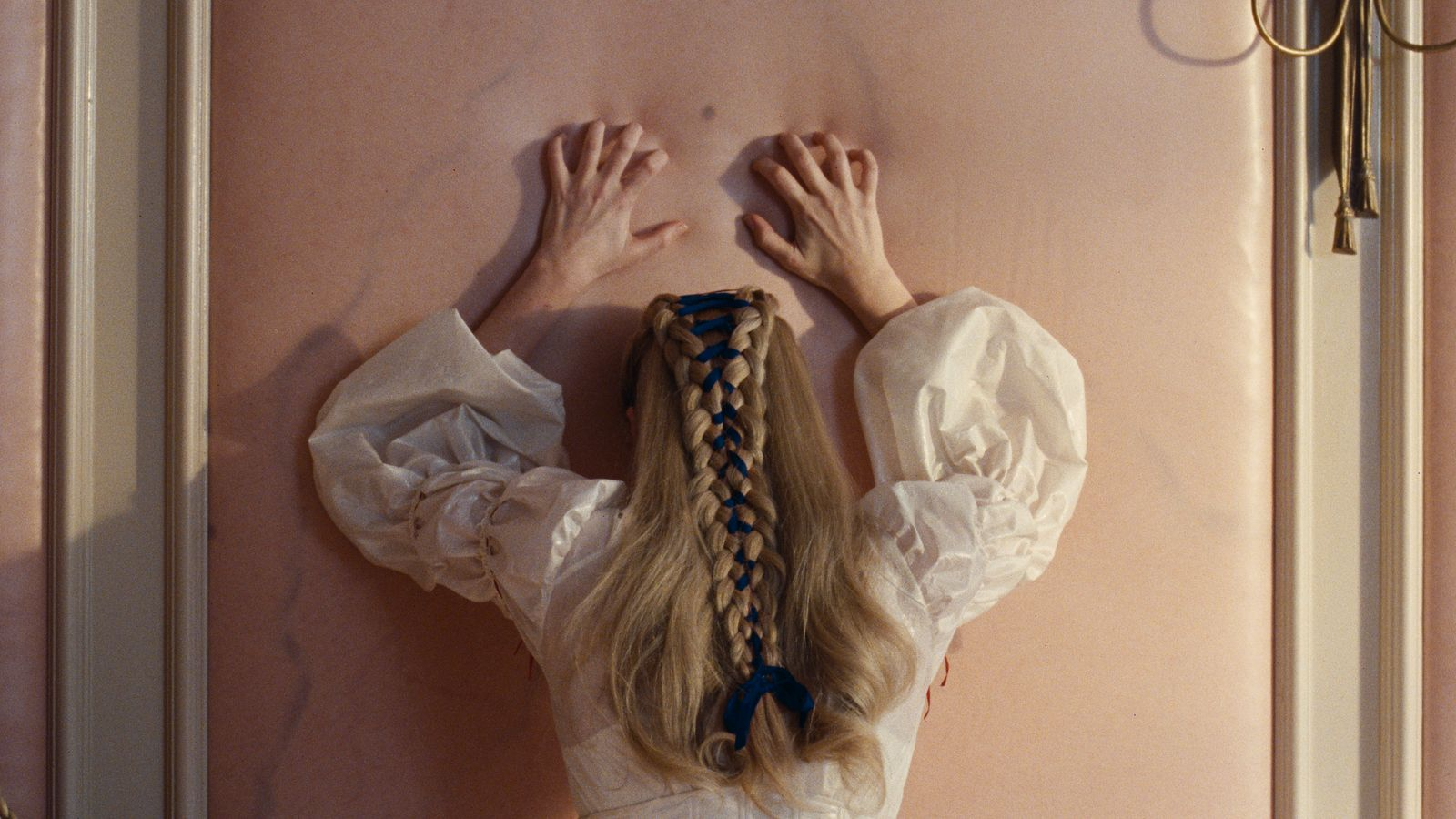
Restrictive corset details reflect Cathy’s gilded cage
In my opinion, the costumes succeed in their job in that they effectively tell the story of Cathy, as well as the other characters, through their wardrobes. Look, no one is tuning into this version of Wuthering Heights for a history lesson, nor should they, so why not make the clothes be interesting? Part of me wonders why Fennell couldn’t have directed her own version of Romeo and Juliet, as that is an explicitly-stated major inspiration for this movie (another part of me wonders if she really longs to put her own stamp on Gone With The Wind, another major cinematic reference for this film, but maybe even Emerald Fennell knows that is beyond her abilities to tackle sensitively) but I do think there is a lot to enjoy and ruminate on with her Wuthering Heights.
And yes, I do foresee many of Cathy’s styles seeping into outfits this spring. We’ve already seen a swing toward the romantic through corsets, lace tights, frilly fabrics, and more. I also already know those rhinestone freckles are going to be the next big festival beauty trend. So historically accurate, these costumes are not, but I find them to be much more exciting when they communicate with our modern world. Don’t you?
Wuthering Heights-Inspired Styles:
